
7 Efficient Kitchen Appliance Settings That Cut Costs
You can save money and energy in your kitchen by adjusting the settings on your appliances. Keep your fridge between 3°C and 4°C, and your freezer at -18°C—it's a game changer for food safety and efficiency. For cooking, use the convection oven setting to cut time and energy use, and preheat your toaster oven instead of the big oven when possible. Wash full loads in your dishwasher, and consider using an energy-efficient induction hob. Simple maintenance, like cleaning filters, also keeps everything running smoothly. Stick around, and you'll discover even more tips to trim those bills!
Key Takeaways
- Set your refrigerator between 3°C to 4°C for optimal food safety and energy efficiency.
- Use convection mode in your oven to reduce cooking time by 25% and lower temperature settings.
- Run your dishwasher only with full loads to save water and energy, especially with Energy Star models.
- Choose induction hobs for faster cooking and higher energy efficiency compared to gas hobs.
- Utilise toaster ovens for smaller meals; they consume less energy and cook faster than conventional ovens.
Optimal Refrigerator Temperature
To keep your food fresh and safe, aim for an ideal refrigerator temperature between 37°F and 40°F (3°C to 4°C). This sweet spot not only keeps your perishables from spoiling but also helps your fridge run more effectively.
If you let the temperature rise or fall too much, you could end up with spoiled groceries or a higher electricity bill. Regularly checking your fridge's temperature guarantees peak performance—think of it as a wellness check for your food!
If you keep your freezer at 0°F (-18°C), you'll save energy and keep everything frozen solid, too.
Seasonal adjustments matter, too. In summer, keep it cooler, especially near heat sources, while winter might require slight tweaks to avoid overcooling.
Efficient Oven Settings
When you want to optimise your cooking experience, understanding efficient oven settings can make all the difference.
First, remember to preheat only as needed; there's no need to wait around longer than the recipe calls for. If you're in a hurry, consider using the broil mode for a quick preheat. Just don't keep opening the oven door like it's a fridge—every peek lets out heat and prolongs cooking time.
Another handy tip? Utilise convection mode! This setting circulates hot air, cutting your cooking time by about 25% and allowing you to lower the temperature.
Now, if you're planning to bake multiple dishes, batch cooking is your friend. It maximises oven efficiency, and who doesn't love a well-planned meal?
Also, take advantage of residual heat by turning off the oven a few minutes before your food's done. Your dish will finish cooking while saving energy.
Finally, invest in thick, heavy-bottom bakeware; it distributes heat evenly and makes your baking life a breeze.
With these tips, you'll be the oven-whisperer in no time, impressing friends and family while keeping your energy bills in check!
Full Load Dishwasher Use
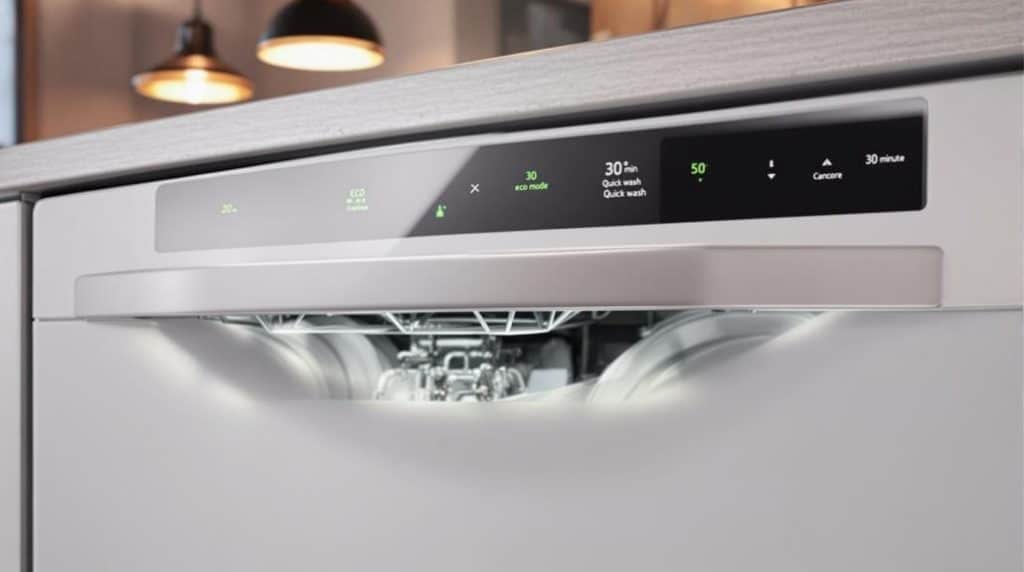
Using a full load in your dishwasher not only saves water but also maximises energy efficiency. Think about it: running a half-full dishwasher wastes twice the water, and that's just no good for your wallet or the planet!
Energy Star models are designed to be 41% more efficient than the minimum federal standards. So, when you fill that dishwasher up, you're using the same amount of energy and water as a partial load.
Also, consider the savings on your water bills and wear on your dishwasher. By using quick wash cycles and taking advantage of delay start options, you can run your dishwasher during off-peak hours, saving even more energy.
Plus, air-drying your dishes instead of using heat drying is a simple way to cut down on energy use.
If you've got an older model, it might be time to upgrade – newer dishwashers built after 2012 use less than 307 kWh per year.
Microwave for Small Portions
Maximising energy efficiency in the kitchen isn't just about filling up your dishwasher; it extends to how you use your microwave, especially for small portions. If you're reheating a single serving or cooking a quick snack, your microwave can be a real energy saver.
Choosing the right wattage is key. Microwaves between 800 and 1000 watts cook efficiently without wasting energy. Plus, if you opt for one with inverter technology, you'll enjoy even cooking and lower energy use. Think of it as your microwave's secret superpower—who wouldn't want that?
When picking a microwave, consider its size. Compact models are perfect for small kitchens and save energy by using less wattage.
Here's a quick comparison to help you decide:
| Feature | Benefits |
|---|---|
| Wattage | 800-1000 watts for efficiency |
| Inverter Technology | Even cooking, less energy waste |
| Compact Size | Ideal for small portions, space-saving |
| Energy Use | Up to 80% less than an oven |
| Nutrient Preservation | Better for veggies than boiling |
Energy-Saving Induction Stoves
Induction stoves revolutionise energy efficiency in the kitchen, offering a powerful alternative to traditional cooking methods. You'll love how these cooktops heat your cookware directly, making them about 85% efficient. That's a huge leap compared to gas stoves, which only manage around 32%!
Plus, you'll notice faster cook times—water boils 20-40% quicker than on conventional stoves, so you can whip up dinner in no time.
Here are three fantastic benefits of using induction stoves:
- Safety First: The cooktop surface stays cool, so you don't have to worry about accidental burns.
- Less Heat Loss: Since the heat goes straight to your cookware, your kitchen stays cooler, reducing the need for air conditioning.
- Precise Control: You'll appreciate the exact temperature settings, making it easier to perfect your recipes.
With all these perks, it's no wonder that induction stoves can save over £125 million in energy costs.
Toaster Oven for Savings
If you're looking for more ways to save on energy costs in the kitchen, a toaster oven is a fantastic option. These nifty gadgets use between 1200 and 1800 watts, which means they consume considerably less energy compared to conventional ovens—about ⅓ to ½ less when you're cooking small meals.
Plus, they cook faster due to their compact size and quick preheating times.
Imagine this: you can whip up a delicious meal for just £0.14 an hour if you use a 1200-watt toaster oven. That's around £4.32 a month! By using your toaster oven instead of that hulking full-size oven, you're not just saving cash, but you're also doing your part for the environment.
Want to maximise your savings? Preheat only when necessary, avoid opening the door too often, and cook multiple items at once.
Regularly cleaning your toaster oven helps it work efficiently too. So next time you're tempted to fire up that big oven, think about how much easier and cheaper it's to use a toaster oven instead! It's a win-win for both your wallet and the planet.
Regular Appliance Maintenance
While maintaining your kitchen appliances may seem like a chore, it's vital for keeping them running efficiently and safely.
Think of it like giving your appliances a little TLC—they'll thank you by working better and lasting longer. Regular maintenance not only saves you money but also boosts energy efficiency and safety.
Here are three simple maintenance tips to keep in mind:
- Defrost Regularly: It's not just for winter! Defrosting your freezer helps it run more efficiently, lowering energy bills.
- Clean the Coils: Dusty refrigerator coils can cause your fridge to work harder than necessary. A quick wipe-down can keep it humming along happily.
- Check Seals: Inspect door gaskets on fridges and freezers to confirm a tight seal. A good seal means less energy waste and fresher food!
Conclusion
By adjusting your kitchen appliance settings, you can save money and energy without sacrificing quality. Whether you're dialling in your refrigerator temperature or making the most of your dishwasher, these small changes add up. So, next time you're cooking or cleaning, think about these tips. You might just find that saving a little cash can feel pretty rewarding. Plus, who doesn't love a more efficient kitchen? Happy cooking, and here's to cutting those costs!