
5 Ways To Fine-Tune Your UK Heating Controls
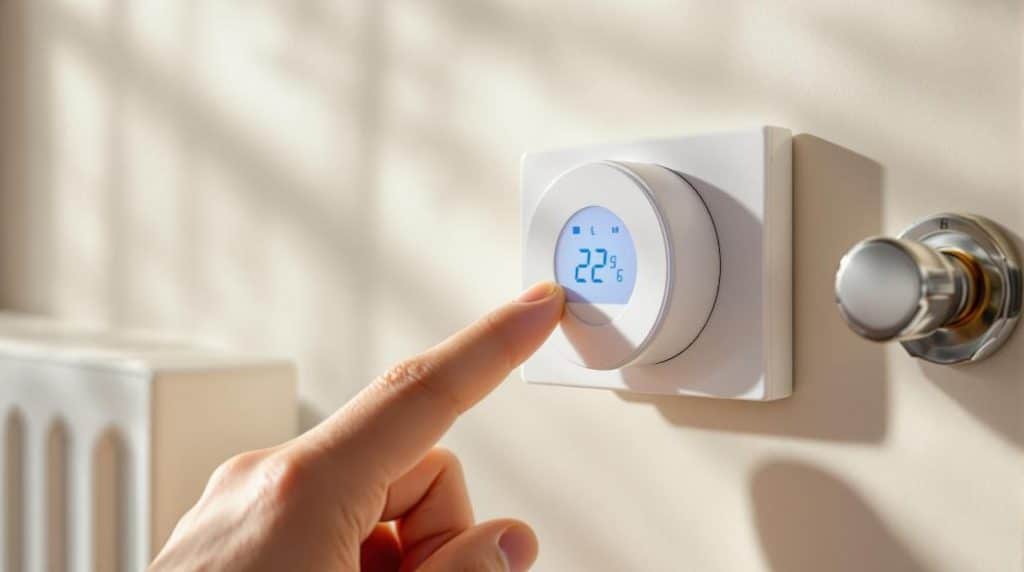
Fine-tuning your UK heating controls can make a big difference in comfort and energy bills! First, assess your existing controls like your thermostat and radiator valves to find inefficiencies. Next, optimise boiler load management—only run what you need! Don't forget to fine-tune your PID controller settings for better temperature accuracy. Implement smart heating solutions, like apps that let you control your heating from the couch—talk about convenience! Finally, educate everyone in your home about proper thermostat use, so they don't crank it up and waste energy. Stick around, and you might discover even more tips to save!
Key Takeaways
- Assess and upgrade existing heating controls, including programmers and smart TRVs, to improve efficiency and comfort.
- Implement sequence control for multi-boiler systems to operate only necessary boilers at full capacity for optimal performance.
- Fine-tune PID controller settings through manual or auto-tuning to enhance temperature accuracy and system responsiveness.
- Utilise smart heating solutions like room thermostats and radiator valves to create a zoned heating system tailored to your lifestyle.
- Educate building users on effective heating practices, such as proper thermostat placement and scheduling, to prevent energy waste.
Assess Existing Heating Controls
When it comes to heating your home efficiently, evaluating your existing heating controls is essential. You mightn't realise it, but those little gadgets can make a huge difference in your energy bills and comfort. A full set of heating controls, including a programmer, thermostat, and thermostatic radiator valves (TRVs), is key.
Think of them as your home's heating superheroes, working together to save energy and reduce CO2 emissions.
Have you ever heard of Time and Temperature Zone Control (TTZC)? This clever system lets you programme different heating schedules for various areas of your home. So, if you want a cosy living room while keeping the spare bedroom cooler, you're in control!
And don't forget about smart TRVs; they can adjust the temperature based on your preferences and are listed in the SAP Product Characteristics Database, which is a fancy way of saying they meet energy efficiency standards.
In short, take a moment to assess what you have. Upgrading to better controls can lead to noticeable energy savings and a comfier home, and who doesn't want that?
It's like giving your heating system a well-deserved makeover!
Modern smart thermostats can help you achieve up to 31% savings on your heating costs through AI-powered learning and automated scheduling.
Optimize Boiler Load Management
To optimise boiler load management effectively, it's essential to implement sequence control, which guarantees that only the necessary number of boilers operate at full capacity to meet heat demand. No more running extra boilers just for kicks! This method can maximise efficiency in multi-boiler setups. Regular gas pressure checks help maintain optimal performance levels while ensuring safe operation throughout the system.
| Control Method | Benefits |
|---|---|
| Traditional Temperature-Based | Engages one boiler at a time, less efficient |
| Sequence Control | Fires only the needed boilers, maximising efficiency |
| Heat Load Control | Adjusts output based on actual demand, ensuring stability |
Fine-Tune PID Controller Settings
Optimising boiler load management sets the stage for fine-tuning PID controller settings, which can markedly enhance overall heating system performance.
Understanding how PID—Proportional-Integral-Derivative—controllers work is key. These nifty devices continuously measure the gap between your desired and actual temperatures, adjusting the power to maintain that perfect cosy vibe.
When tuning your PID controller, you've got two main paths: manual tuning or auto-tuning. If you're feeling adventurous, manual tuning starts with setting all gains to zero.
Next, you'll increase the Proportional gain until your system responds smoothly, without dramatic fluctuations. Then, tweak the Integral gain to eliminate any lingering steady-state errors. If things still feel a bit wobbly, introduce the Derivative gain to minimise overshoot.
But don't forget to document everything! Keeping track of your changes helps you learn and refine your approach over time.
Regularly reviewing and adjusting these settings based on your system's responses can make a world of difference. With a little patience and practice, you'll have your heating system purring like a content cat on a sunny windowsill.
Implement Smart Heating Solutions
As you look to enhance your heating system's efficiency, implementing smart heating solutions can make a significant difference.
Imagine controlling your home's temperature from your phone while you're cosied up on the couch. Smart room thermostats connect to your central heating system, letting you manage heating for the entire house or each room independently. Some models even work without a smart hub, making setup a breeze!
Adding smart radiator valves takes your control a step further. You can adjust the temperature of each radiator remotely, ensuring comfort where you need it most. Plus, when paired with smart thermostats, you can create a zoned heating system tailored to your lifestyle.
And don't forget about smart central heating control packs! These kits bundle several components, giving you an all-encompassing solution for managing your heating with ease.
By optimising heating schedules and temperatures, you could save anywhere from 10% to 35% on your energy bills—now that's something to smile about!
With these innovations, you'll not only enjoy a cosier home but also contribute to reducing energy consumption. Who knew being warm and smart could go hand in hand?
For ultimate peace of mind, Gas Safe registered engineers can help ensure your smart heating controls are properly installed and functioning safely.
Educate Building Users
While smart heating solutions enhance your control over home temperatures, understanding how to use these systems effectively is just as important. You might think that cranking up the thermostat will warm your space faster, but that's a myth! It can actually lead to energy waste, so it's vital to educate yourself about how these controls work.
Start by familiarising yourself with the basic components: the sensor, controller, and controlled device. When you know what each part does, you'll feel more in control. Labelling your heating controls with preferred settings can also help you quickly return to your usual comfort zone after someone else adjusts them.
Make sure your thermostat is placed correctly, as its location can greatly affect temperature readings. Scheduling your heating to match your daily routines guarantees you're not wasting energy when you're out.
And don't forget regular maintenance—keeping your system in tip-top shape means it'll work efficiently.
Lastly, consider sharing tips with others in your building. When everyone understands their heating controls, it can lead to considerable energy savings, and who doesn't love saving a bit of cash?
Conclusion
By evaluating your existing heating controls, optimising your boiler, fine-tuning settings, and considering smart solutions, you can really make a difference in your home's warmth and comfort. Plus, don't forget to share what you learn with others—after all, the more the merrier! With a little effort, you'll be cosy and warm in no time. Just think of it as a fun project, not a chore! Happy heating!
Want smarter heating control? I carry out smart thermostat installation in Dartford and Gravesend.