
What Time Should You Run Your Washing Machine?
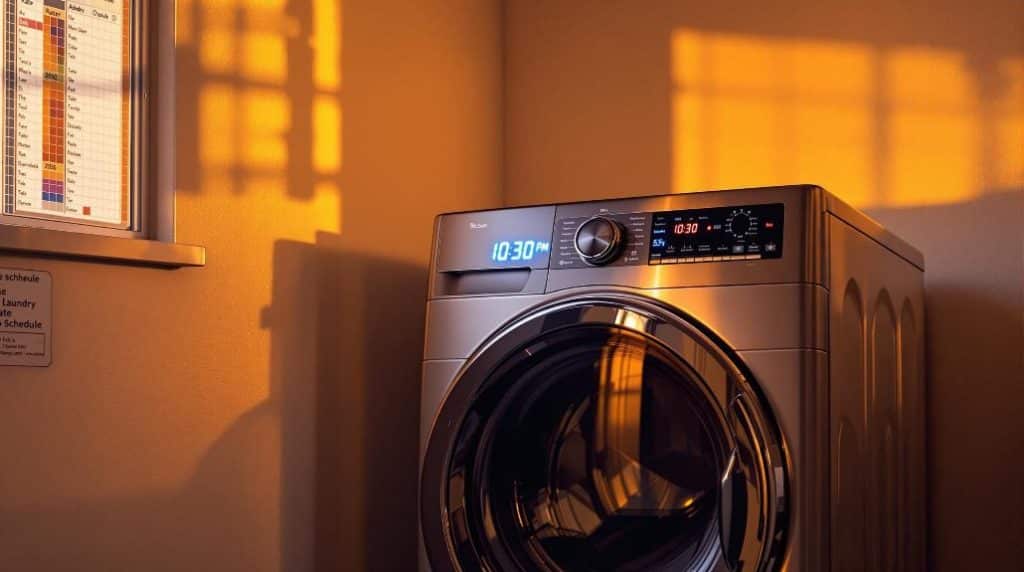
To save money on your laundry, run your washing machine during off-peak hours, usually from 22:00 to 08:00. These times lower your energy costs, letting you save some money while you snooze! If you're an early riser, starting a load around 07:00 can work too—just don't forget to check your local energy provider's specific hours. And here's a tip: running full loads is way more efficient than doing several smaller ones. So, go ahead, toss in those clothes and take a break—there's more to discover about optimising laundry time!
Key Takeaways
- Run your washing machine during off-peak hours (23:00 to 07:00) to save on electricity costs.
- Optimal laundry times include starting at 22:00 for savings while you sleep.
- For laundry efficiency, always aim to run full loads rather than multiple smaller loads.
- Adjust laundry times seasonally; prefer evenings in winter and early mornings in summer.
- Utilise timers to start laundry during off-peak hours for convenience and peace of mind.
Understanding Peak and Off-Peak Hours
Understanding peak and off-peak hours is essential for managing your electricity costs effectively. You mightn't realise it, but when you run your washing machine during peak hours—typically from 16:00 to 20:00—you're likely doubling your electricity charges. That's right! It's when everyone's home, using energy like it's going out of style.
Now, let's talk about off-peak hours. These are your money-saving sweet spots, generally between 23:00 and 07:00, or even from 13:30 to 16:00. Running your washer during these times can considerably lower your bills. Just think about it: you can save money while you sleep!
However, there's a catch—don't leave your washing machine running overnight. It's not just about saving cash; safety matters too. You wouldn't want to wake up to a flooded laundry room, right?
Instead, you could use a timer to start your laundry early in the morning, say between 07:00 and 08:00. That way, you get the best of both worlds: lower rates and more peace of mind. So, plan wisely, and you'll see those savings add up!
Best Times for Cheap Laundry
To save money on laundry, you should aim to run your washing machine during off-peak hours, which typically fall between 22:00 and 08:00. This is when energy demand is lower, and you'll avoid those pesky high rates that hit between 08:00 and 20:00.
If you're an early bird, consider doing laundry from 07:00 to 08:00, just before you dash out the door.
Starting your wash at 22:00 is a sweet spot; it helps keep your bills in check while you catch some Z's. Just remember to check with your energy provider, as off-peak hours can vary.
Safety first! You might want to avoid leaving your machine running overnight, just in case. A good idea is to use a timer, so your laundry finishes up before peak hours kick in.
Plus, running full loads is way more efficient than doing several smaller ones, and washing in cold water can save some serious cash too.
Seasonal Laundry Timing Tips
Timing your laundry can change with the seasons, so it's smart to adjust your routine based on the weather. Each season offers unique advantages for getting your laundry done efficiently. Here are some tips to take into account:
1. Winter: Avoid those busy morning hours. Doing laundry in the evening not only saves energy costs but also takes advantage of lower humidity, which can help your clothes dry faster.
Just remember, drying might take a bit longer due to the cold!
2. Summer: Early mornings or late nights are your best friends. Peak hours typically run from 10 am to 8 pm, so dodge those times.
On sunny, less humid days, your clothes will dry in no time, and that bright sunlight keeps colours vibrant.
3. Spring and Fall: These seasons are all about balance. Gentle breezes and moderate temperatures can speed up drying.
Late mornings to early afternoons are ideal, especially on lower humidity days. You'll find your laundry feeling fresher and dryer faster!
Adjusting your laundry timing seasonally not only saves energy but also makes laundry day a little less of a chore!
Load Sizes and Energy Efficiency
While it may be tempting to do laundry in smaller loads, maximising your load size can greatly enhance energy efficiency.
Think about it: when you fill your washing machine to its full capacity, you're spreading the energy used for heating water and washing over more items. This means you waste less energy per shirt or sock you clean. Running full loads also cuts down on the number of times you need to run the machine, which means less energy overall.
If you've got a high-efficiency washer, you're in luck! These machines are designed to minimise water and energy use, especially when you're washing larger loads.
Imagine saving energy while getting your laundry done in one go rather than three smaller loads. Plus, did you know that energy consumption stays pretty steady per cycle, regardless of load size?
Energy-Saving Washing Machine Features
Energy-saving features in modern washing machines can greatly reduce your electricity and water bills, making laundry day more efficient.
You'll be amazed at how these innovations can help you save while keeping your clothes fresh. Here are three standout features to look for:
- Eco Modes: These settings optimise your wash cycle, using lower temperatures and less water, potentially saving up to 50% of energy compared to regular cycles.
- AI Wash Technology: This smart feature senses the fabric type and adjusts the cycle accordingly. It can save you up to 70% of energy by using just the right amount of water and detergent.
- Inverter Motors: Designed for quieter operation, these motors also enhance energy efficiency, so you can run your machine anytime without worrying about waking the neighbours!
Impact of Maintenance on Efficiency
When you prioritise regular maintenance for your washing machine, you not only enhance its efficiency but also extend its lifespan.
Imagine your machine happily spinning away, using less energy and producing cleaner clothes. That's what maintenance does! By regularly cleaning the agitator and filters, you prevent dirt buildup, which can lead to poor performance.
Neglecting maintenance, on the other hand, is like letting your car run on empty—it just won't work well. You'll notice longer washing times and might find yourself shelling out more for repairs. Nobody wants that surprise bill, right?
Plus, with a well-maintained machine, you're saving on energy costs, making your wallet cheer!
And let's not forget sustainability; a properly functioning machine uses less water and energy, making Mother Earth smile.
Practical Tips for Cost-Effective Laundry
If you want to make your laundry routine more cost-effective, timing and techniques matter.
By being smart about when and how you wash, you can save some serious cash. Here are three practical tips to get you started:
1. Wash During Off-Peak Hours****: Try running your machine late at night or early in the morning, when energy rates can drop considerably.
You could even aim for those magic hours between 11 pm and 7 am.
2. Go Cold: Washing your clothes in cold water can save you up to £0.50 per load.
Over a year, that adds up to £150! Plus, your clothes will last longer.
3. Full Loads Only: Avoid doing multiple small loads—wash full loads whenever you can.
This not only saves energy but also makes the most of your detergent.
Conclusion
So, when you're thinking about running your washing machine, remember to contemplate those off-peak hours for the best savings. Timing your laundry can really make a difference in your energy bill, plus it gives you a reason to tackle that laundry mountain you've been avoiding! With a little planning and a few energy-saving features, you can keep your clothes fresh and your wallet happy. Now, go on, conquer that laundry like a pro!