
Line-Drying Vs Tumble Dryers: the Money Battle
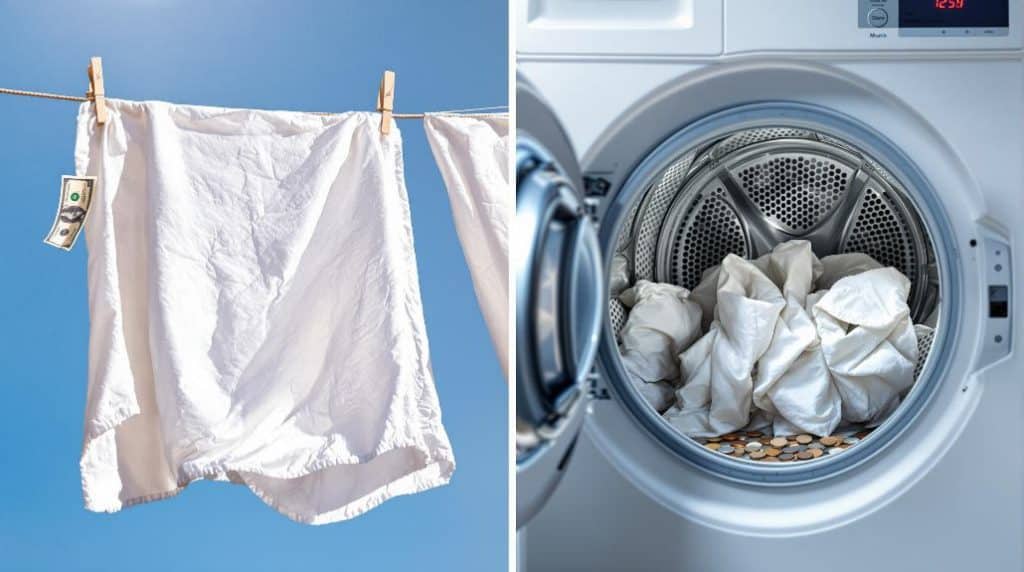
When you're trying to save money on laundry, line drying is your wallet's best friend. A simple setup costs just a few pounds and saves you up to £280 a year since you won't face energy bills. On the other hand, tumble dryers can set you back hundreds upfront, plus they add up to £224 annually in running costs. Sure, they dry fast, but they wear out your clothes and your bank account! If you're up for saving a few quid and embracing the fresh air, stick around; there's more to discover about your drying choices!
Key Takeaways
- Line drying has minimal upfront costs (~£12) with no ongoing energy bills, while tumble dryers have high purchase prices and significant operating costs.
- Annual savings from line drying can reach up to £280, while tumble dryer expenses can range from £104 to £224.
- Line drying reduces energy consumption and lowers carbon footprints by up to 67%, making it the eco-friendlier choice.
- Air drying extends the lifespan of fabrics and prevents damage, unlike tumble drying, which can cause wear and tear.
- Tumble dryers are time-efficient, drying loads in under an hour, but require considerable space and energy compared to line drying.
Cost of Line Drying
When considering the cost of line drying, you'll find it's an economical choice that can save you money over time.
First off, the initial equipment costs are super low. You can snag a retractable clothesline for around £2 or a drying rack for just £10. That's a tiny investment, right? Plus, you won't have any ongoing energy bills—zero electricity or gas costs here!
Setting up your line is a breeze, too. You don't need a ton of space, and there's no fuss with complicated setups. Forget those expensive chemical softeners and dryer sheets; line drying keeps your clothes fresh without them.
Long-term savings are the real kicker. You could save up to £280 a year just by ditching the dryer. Not to mention, your clothes will last longer because line drying is gentle on fabrics.
Tumble Dryer Expenses
While line drying offers significant savings, tumble dryers come with their own set of expenses that can quickly add up.
First off, the purchase prices can be pretty steep. Expect to shell out around £600 for an electric dryer or even £850 for gas.
Then, there's the operating cost. You could be looking at anywhere from £104 to £224 annually, depending on usage and the model you choose.
Let's break it down a bit: running a load might cost you between 30 to 90 pence, and if you've got a large family doing three loads a week, you're potentially racking up about £118 a year!
Plus, if something goes wrong, repairs can hit you hard, averaging between £100 to £300.
Annual Savings Comparison
Switching to line drying can save you an impressive average of £280 annually, making it a financially smart choice for many households.
Imagine what you could do with that extra cash—maybe treat yourself to a nice dinner or a weekend getaway!
Here are some key factors to take into account about your savings:
- Laundry frequency: The more loads you do, the more you save.
- Drying duration: Longer dryer cycles lead to higher energy waste, so don't over-dry!
- Seasonal variations: In summer, running the dryer can crank up your AC bill.
- Appliance efficiency: If you own a super-efficient dryer, your savings might be less.
- Clothes type: Delicate fabrics last longer when line dried, saving you money in the long run.
Environmental Benefits of Air Drying
Air drying your clothes not only saves money but also brings significant environmental benefits. When you skip the tumble dryer, you're cutting down on energy consumption—no more high utility bills! Instead of relying on electricity, you're harnessing the power of fresh air and sunlight, which means you're also reducing greenhouse gas emissions. You could lower your carbon footprint by up to 67% just by hanging your clothes out to dry.
Plus, air drying extends the lifespan of your favourite outfits! That gentle breeze and sunlight help preserve delicate fabrics, keeping them looking great longer. You won't have to worry about wear and tear from the intense heat of a dryer.
And let's not forget the natural disinfecting power of sunlight. It keeps your clothes smelling fresh and helps reduce those pesky musty odours.
So, while you're hanging laundry, you might even get a little vitamin D and fresh air yourself! It's a win-win.
Energy Consumption Analysis
Choosing to line-dry your clothes not only benefits your wallet and wardrobe but also highlights the stark energy consumption differences between air drying and tumble drying.
Tumble dryers are notorious for their high energy usage, costing you over £100 annually just to keep those clothes toasty. Meanwhile, line drying doesn't cost you a penny beyond that initial investment in a clothesline.
Here's a quick look at the energy consumption battle:
- Tumble dryers use over 3 kWh of electricity per load.
- You could save up to £280 a year by line-drying instead of using a dryer.
- The average dryer costs about 30 pence per load to operate.
- Tumble dryers are among the most energy-intensive household appliances.
- Line drying uses free solar energy, so Mother Nature covers your expenses!
Imagine the satisfaction of saving money while also feeling like an eco-warrior.
You can enjoy fresh-smelling clothes without those pesky energy bills. So, why not embrace the sun and fresh air? Your wallet—and the planet—will thank you!
Time Required for Each Method
When it comes to drying your laundry, time plays a crucial role in your decision-making. If you're in a hurry, tumble dryers can be your best friend, drying a full load in under an hour. That's right—less than 60 minutes!
On the other hand, line drying can take anywhere from 6 to 12 hours, or even longer if the weather's not cooperating. Ever tried hanging clothes outside on a rainy day? Talk about a wet blanket on your laundry plans!
Now, if you're using a tumble dryer, you can wash and dry multiple loads back-to-back, making it super convenient. Just remember, the heat setting you choose will impact drying speed. Higher heat means faster drying, but it could also damage delicate fabrics. So, choose wisely!
If you prefer line drying, be mindful of humidity and weather conditions. Indoor drying can take twice as long, and shaking garments before hanging can help speed things up.
Ultimately, your choice between these methods hinges on how much time you have and how much patience you're willing to invest in the process. Happy drying!
Impact on Clothing Longevity
While you might appreciate the quick turnaround of a tumble dryer, opting for line drying can greatly extend the life of your clothing.
Imagine your favourite sweater lasting season after season, all because you chose to hang it out instead of tossing it into the dryer.
Line drying does wonders for your garments, and here's why:
- Less Wear and Tear: It prevents fibre breakage and holes, keeping your clothes intact.
- Fabric Preservation: Delicate materials like wool and silk are safer from pilling and fading.
- No Shrinkage: You can say goodbye to the dreaded shrunken sweater nightmare.
- Environmentally Friendly: You're reducing your carbon footprint while caring for your clothes.
- Cost Savings: Longer-lasting clothes mean fewer replacements and lower energy bills.
Weather Limitations for Drying
Though line drying offers numerous benefits, weather limitations can greatly impact your ability to effectively dry clothes outdoors. Imagine this: it's a sunny summer day, and your laundry dances in the breeze. Perfect, right? But then, suddenly, clouds roll in, and your clothes might end up soggy instead of sun-kissed. Here's a breakdown of how weather affects your drying game:
| Condition | Effect on Drying |
|---|---|
| High Temperature | Speeds up drying with evaporation |
| High Humidity | Slows down drying time |
| Windy Conditions | Quickens drying by promoting airflow |
| Cold Days | Slower drying, but dry air can help |
In summer, you've got the best drying conditions, whilst spring offers a nice balance. Fall and winter can be tricky, as cool temps and potential rain can dampen your efforts. On those chilly days, you might find yourself wondering if your clothes will ever dry! So, keep an eye on the forecast and adjust your drying plans accordingly, because sometimes, Mother Nature just doesn't cooperate!
Practical Considerations for Households
Weather can certainly throw a wrench in your line-drying plans, but practical considerations can help you make the most of your laundry routine. With a little planning, you can enjoy the benefits of line drying while keeping your clothes fresh and your energy bills low.
Here are some practical tips to contemplate:
- Space matters: Find a clothesline that fits your available space, indoors or outdoors.
- Choose wisely: Outdoor lines are sturdier for the elements, while indoor lines can be hung from walls or ceilings.
- Retractable options: If space is tight, retractable clotheslines or drying racks can be a lifesaver.
- Get sturdy clothespins: You'll need about 200-250 durable clothespins for a full load, but sharing them can ease the task.
- Hang with care: Using two clothespins per item can help prevent clothes from tumbling down unexpectedly.
Personal Priorities in Drying Choices
When it comes to choosing between line drying and tumble drying, personal priorities play an essential role in your decision-making process. Think about what matters most to you—saving money, protecting your clothes, or convenience? Each option has its perks.
Here's a quick breakdown of personal priorities:
| Priority | Line Drying | Tumble Drying |
|---|---|---|
| Environmental Impact | Eco-friendly, no emissions | High energy consumption |
| Fabric Care | Preserves delicate fabrics | Can cause wear and tear |
| Convenience | Weather-dependent | Quick and hands-off |
| Cost Efficiency | Saves on energy bills | Higher utility costs |
If you're eco-conscious and want to keep your favourite silk blouse in great shape, line drying might be your go-to. On the other hand, if you lead a busy life and need your clothes dry in a hurry, a tumble dryer could be your best friend. Ultimately, think about your priorities, and you'll find the perfect drying method that suits your lifestyle. So, what'll it be? Your choice could save you money and keep your wardrobe fresh!
Conclusion
So, whether you're hanging clothes on a line or tossing them in a tumble dryer, it all boils down to your priorities. If you want to save money and help the planet, line drying's your friend. But if convenience and speed win your heart, a tumble dryer's hard to beat. Just remember, whatever you choose, you're making a decision that fits your lifestyle. Plus, who doesn't love the smell of fresh air on their clothes, right?